
Klook: Travel & Activities
Klook Travel Technology Ltd.Travel & Local
4.5601.00 Reviews
- Version
- 7.51.0
- Installs
- 10.00M
- Age Rating
- Everyone
Screenshots
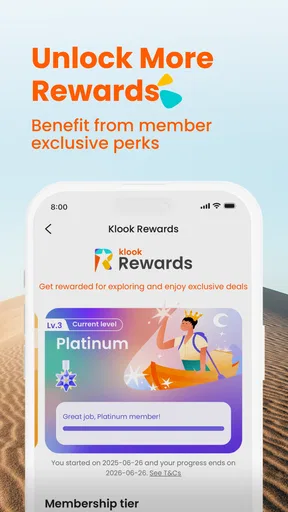
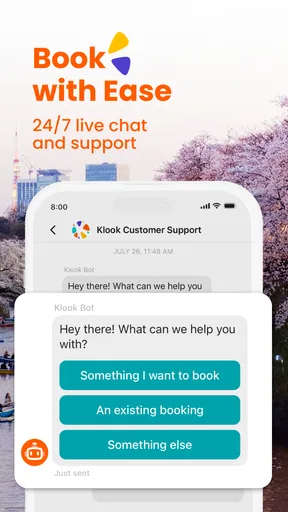
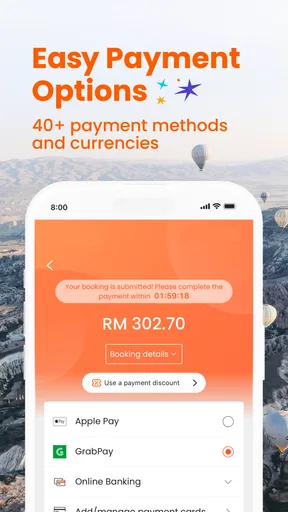
Our Review of Klook: Travel & Activities
 Analysis by Appyee
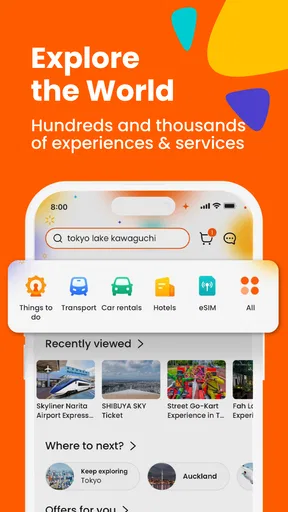
I used Klook: Travel & Activities as the sort of travel companion I would open when a trip is still a collection of loose plans: a train to reserve, an attraction to compare, a transfer to arrange, or a day tour that needs booking before I arrive. It is a free Travel & Local app from Klook Travel Technology Ltd., and its broad focus makes it feel less like a single-purpose ticket wallet and more like a marketplace for building parts of a journey.
That breadth is its main appeal, but it also shapes the way I judge it. This is not an app I would treat as a complete replacement for every airline, railway, hotel, or local transport service. I see it as a practical layer between research and purchase, especially when I want several travel activities in one place. The experience depends heavily on having a usable connection at the right moments, so the real question is not simply whether it lists attractions. It is whether it remains helpful while I am moving through airports, stations, unfamiliar streets, and busy tourist areas.
Where a connection makes the biggest difference
The first important distinction is between browsing and proving that a booking is ready to use. While planning at home, I can take my time comparing tours, attraction tickets, trains, and car rentals. A reliable connection makes this part comfortable because I can move between options, inspect the details, and decide whether an activity fits the rest of my schedule. That makes the app useful before the trip, not only during it.
On the road, the pressure changes. I may be standing outside a station, trying to confirm a departure, or approaching an attraction while checking what I booked. In those moments, a weak signal changes the experience from quick confirmation to uncertainty. I would not wait until the entrance gate to discover that I need to load an important booking screen. My practical habit is to review each reservation while I still have dependable internet and keep the essential information easy to reach on my phone.
This connectivity issue is especially relevant when an itinerary contains several separate purchases. A day can involve transport in the morning, a timed attraction at midday, and a tour later on. The app can help gather those decisions in one travel workflow, but the convenience is strongest when I prepare before leaving the hotel or another reliable connection. The marketplace is useful for organizing choices; it should not encourage me to postpone every confirmation until the busiest part of the day.
I also found that connection quality affects comparison more than people expect. If pages or booking details take longer to load, I am more likely to choose the first acceptable option instead of checking cancellation terms, meeting instructions, or timing carefully. That is not a flaw unique to this app, but it matters here because travel products often have conditions that are easy to overlook when I am rushing. A calm planning session produces a better result than hurried mobile shopping beside a crowded landmark.
Planning before leaving home
For advance planning, I would use the app as a shortlist builder rather than immediately buying the first result. I can decide what kind of experience I need, compare alternatives, and then check how the timing interacts with transport and other reservations. This is one of the less obvious strengths of a broad travel marketplace: it encourages me to think about the whole day instead of treating every ticket as an isolated purchase.
My advice is to make a simple sequence outside the app while planning: arrival time, travel time, activity window, and a little room for delays. Then use Klook to fill the gaps. This reduces the temptation to stack activities too closely just because each individual listing looks convenient. A booking platform can simplify purchasing, but it cannot remove traffic, queues, weather, or the time needed to find a meeting point.
Another useful habit is to read the operational details before paying, not after. For a tour, the meeting location may matter more than the headline activity. For a train, the departure time and station can determine whether the rest of the day works. For a car rental, collection arrangements and return timing deserve attention. The app’s range is valuable only if I slow down enough to match the product to my actual route.
Using it in airports, stations, and streets
Mobile travel use is rarely tidy. I might have one hand on luggage, a low battery, and only a few seconds to check a reservation. In that setting, Klook is most useful when I have already reduced the number of decisions I need to make. I would not want to conduct a full comparison while boarding a train. I would rather use the app earlier, decide, and then return only to the relevant booking information.
A realistic example is a weekend arrival in a city I do not know. Before departure, I could use the app to arrange an attraction and investigate transport or a car rental for a later part of the trip. After landing, I would check the exact activity details on a dependable connection, confirm the route, and avoid opening several unrelated listings while navigating. If the attraction has a timed entry, I would treat that time as fixed and build the rest of the day around it rather than assuming every part of the journey will run perfectly.
This workflow also answers a common practical question: can the app replace local maps or a transport operator’s own service? I would not rely on it for that. Klook is useful for discovering and booking travel products, while maps and official transport tools may be better for live directions, service changes, platform information, or local navigation. Using each tool for its strongest job is more dependable than expecting one app to handle the entire trip.
When things go wrong
The most revealing test of a travel app is not the easy purchase. It is the moment a plan changes. A delayed flight, a missed connection, a closed attraction, or a wrong meeting point can turn a simple booking into a support problem. In those situations, I would first open the relevant reservation and read its conditions carefully. The next step depends on the product, so I would avoid assuming that every ticket or tour can be changed in the same way.
Connectivity becomes part of recovery here. If I cannot load the booking or contact the appropriate support channel, I lose time at exactly the wrong moment. That is why I prefer to inspect confirmation details before travelling and note the key reference information in a form I can access without repeatedly searching. I am not treating that as a promise of offline functionality; it is simply sensible preparation for a service that is used in places where coverage can be inconsistent.
There is also a trade-off between using a marketplace and booking directly with an operator. A marketplace can make discovery and comparison easier, particularly when I am arranging several kinds of activities. Direct booking may be preferable when I already know the exact provider, need a specialized change policy, or want the most direct communication for a complicated reservation. Klook is strongest when convenience and variety matter more than having every part of the relationship handled by the operator itself.
If a booking does not appear as expected, I would avoid making a second purchase immediately. First I would verify the account used, the activity date, the confirmation information, and the connection. Repeating the transaction while a page is still loading can create unnecessary confusion. This is a small but important travel habit: pause, check the transaction status, and only then decide whether another action is needed.
Keeping mobile use sensible
Travel apps can consume attention as well as mobile data. I would use Klook on Wi-Fi for the most demanding part of planning, especially when comparing many options or reviewing several destinations. On mobile data, I would keep the task narrow: open an existing reservation, check a meeting point, or complete a decision I have already researched. This is more comfortable than browsing endlessly while walking through an unfamiliar place.
I would also avoid relying on a single screen at the exact moment of entry. If a ticket or confirmation is important, I would prepare before arriving and make sure the phone is charged enough for the day. A connection problem is only one possible failure; a dead battery, poor reception inside a station, or an accidentally closed session can create the same practical difficulty. Good preparation makes the app a useful tool instead of the only thing holding the itinerary together.
For travelers using roaming data, the app’s wide selection can create a particular temptation: opening one destination after another and continuing to compare even after the main plans are settled. I find that unnecessary. Once I have chosen a suitable activity, the better use of mobile data is checking timing, location, and instructions rather than repeatedly reopening the entire marketplace.
This is also where the app’s free price is easy to misunderstand. There is no charge to install and use the app itself, but the travel products inside it are purchases. I would compare the complete cost and conditions of each activity rather than assuming that a free app means a cheaper trip. Convenience is the benefit; value depends on the specific tour, ticket, train, or rental I select.
Who will appreciate the broad approach
I think Klook suits travelers who enjoy arranging several trip elements from one familiar place. It is particularly appealing when I am visiting a destination for the first time and want to discover activities alongside practical transport choices. Families and small groups may also appreciate having a shared starting point for comparing options, although I would still check age requirements, schedules, and suitability for every member before booking.
It can also help spontaneous travelers, but only within limits. If I have a free afternoon and a stable connection, browsing available experiences can turn an empty block into a plan. The risk is that spontaneity becomes overbooking. I would leave enough time to reach the activity and confirm where it begins, especially for tours with a meeting point outside the main attraction.
The app is less suitable for someone who already has a precise itinerary built through official providers and does not want another layer between them and the booking. It may also frustrate travelers who expect every reservation to behave identically or who need a highly specialized customer-service relationship. In those cases, going directly to a railway, attraction, rental company, or tour operator can be clearer.
How it compares with familiar alternatives
Compared with searching each provider separately, Klook offers a more unified discovery process. I can begin with the destination and type of activity instead of remembering which local website handles each purchase. That is valuable during the research stage and can reduce the number of apps I need to investigate. The compromise is that I must still understand who actually operates the experience and what conditions apply to that particular product.
Compared with a standard maps app, it is more focused on turning an idea into a bookable activity. Maps are better for seeing the surrounding area, estimating walking routes, and reacting to live movement. Klook is better when I want to explore organized experiences, attraction access, trains, or rentals in a travel-shopping context. I would use both rather than treating them as competitors in every situation.
Compared with booking directly, the choice comes down to convenience versus control. Klook can be the faster route when I am still deciding what to do. Direct booking can be the better route when I know the provider, require a specific policy, or want to minimize the number of parties involved if a change is needed. Neither approach wins universally; the right choice depends on how settled and how complicated the plan is.
What the app’s track record suggests
The app has been available since May 26, 2015, and its scale is noticeable: it has passed ten million installs and holds a 4.5 average from around 145 thousand ratings. Those figures make it clear that this is an established travel tool rather than a tiny experiment. They do not remove the need to inspect individual booking terms, but they give me confidence that the product is intended for regular, broad travel use.
It is free, rated for Everyone, and currently listed as version 7.51.0 for devices running Android 7.0 or later. That makes the basic entry barrier low for many Android travelers. I would still update before a trip when possible, not because an update guarantees perfect connectivity, but because travel is a poor time to discover that an older installation behaves differently from the current one.
The large audience also creates a useful expectation: this is designed for ordinary travelers, not only expert planners. The interface aims to support discovery as well as booking, which can be helpful when I do not yet know the local options. At the same time, beginners should not confuse a polished booking flow with a complete travel plan. I still need to check geography, timing, transport, and the practical details that no marketplace can decide for me.
My connectivity verdict
My overall view is positive, with one clear condition: I would use Klook as a connected planning and booking tool, then prepare for the moments when the connection may be unreliable. Its strongest contribution is bringing tours, attractions, tickets, trains, and car rentals into one travel-oriented experience. That is genuinely convenient when I am assembling a trip and do not want to begin every search from a different provider.
I would recommend it to a friend who wants destination ideas, prefers a single starting point, and is comfortable checking the details of each purchase. I would especially recommend planning the important bookings while connected to dependable Wi-Fi, then reviewing the reservations before heading into airports, stations, or crowded attractions. That simple routine addresses the app’s biggest practical weakness without taking away its main advantage.
I would skip it as my primary option if I already know the exact operator, need unusually direct support, or expect the app to provide live navigation and a complete offline travel plan. In those cases, official provider tools and maps may serve me better. For everyone else, the balance is sensible: use Klook to discover and arrange the trip, but do not make a fragile mobile connection responsible for the whole journey.
After using it in that role, I see Klook: Travel & Activities as a useful travel marketplace rather than a magic travel organizer. It saves time during research, can simplify multi-part planning, and works well when I approach each booking thoughtfully. Its value is highest before the trip and during prepared check-ins; its limits become obvious when I am offline, rushed, or trying to solve a complicated change at the last minute.
Verdict
Strengths of Klook: Travel & Activities
- Wide selection of tours, tickets, transport, and local activities
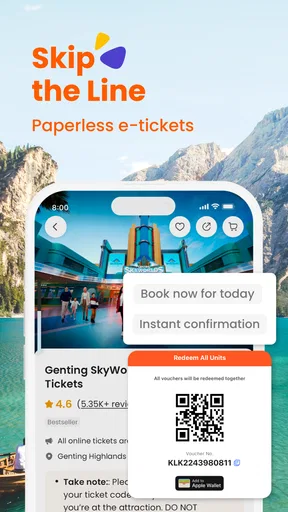
- Convenient mobile vouchers reduce the need for printed confirmations
- Frequent discounts and package deals can lower travel costs
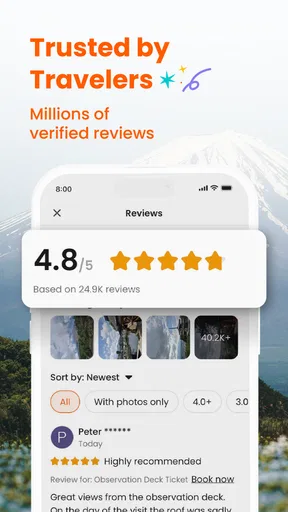
- Reviews and ratings help compare activities before booking
- Multilingual support makes planning easier for international travelers
Limitations of Klook: Travel & Activities
- Availability and prices can vary significantly by destination
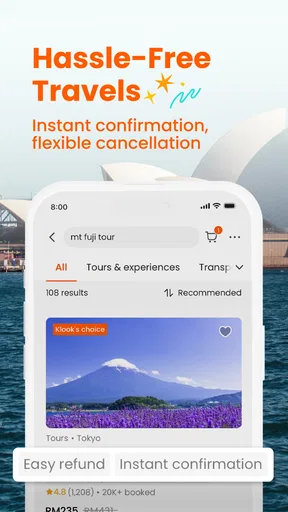
- Some bookings have strict cancellation or refund conditions
- Customer support response times may be slow during busy periods
- Meeting points and pickup details are not always easy to find
- Certain activities require separate reservations after purchase
Similar Picks in This Category
View All
Google Maps
Google LLC3.4

Google Maps Go
Google LLC4.1

Booking.com: Hotels & Travel
Booking.com Hotels & Vacation Rentals4.8

Google Earth
Google LLC3.8

Skyscanner Flights Hotels Cars
Skyscanner Ltd4.8

trivago: Compare hotel prices
trivago N.V.4.4
Frequently Asked Questions
What is Klook: Travel & Activities used for?
Klook is a travel-planning and booking app that lets you discover and reserve activities, attractions, tours, transportation, hotel-related services, and travel essentials in destinations around the world. During our review, the app was particularly useful for comparing experiences, checking availability, reading customer feedback, and keeping booking confirmations in one place instead of managing several travel websites separately.
Can I trust Klook bookings and is the app safe to use?
Klook uses account security and payment-protection features designed to make booking through the app convenient and reliable. However, users should still check the provider’s name, cancellation rules, meeting point, inclusions, and recent reviews before paying. Klook acts as a booking platform, so the actual experience can vary depending on the local tour operator or activity provider.
Does Klook offer free cancellation or refunds?
Cancellation and refund policies depend on the specific activity, ticket, transfer, or service you purchase. Some options allow free cancellation until a stated deadline, while others are non-refundable once booked or redeemed. Before confirming payment, open the full booking conditions and note the exact cancellation window, refund method, processing time, and any restrictions related to date changes or no-shows.
Can I use Klook without an internet connection while traveling?
You generally need an internet connection to search, make bookings, view live availability, and receive updates. After booking, many reservations can be accessed in the app through your account, and some vouchers may be available for offline display, although this can depend on the product. It is wise to save important confirmation details and download vouchers before leaving reliable Wi-Fi.
What should I check before booking an activity on Klook?
Before booking, carefully review the activity date, starting time, duration, location, language, age requirements, accessibility information, inclusions, exclusions, and redemption instructions. Pay special attention to meeting points and transportation arrangements, since arriving late may mean losing the reservation. Comparing several listings and reading recent verified reviews can also help you avoid unsuitable or misleading options.
